
Help Advance Research in Children
Who can participate?
11-17.99 y/o
Diagnosed with a concussion by a health care provider
Are within 35 days of their injury AND still symptomatic
English speaking (Spanish-speaking parents will be included)
What is involved for participants?
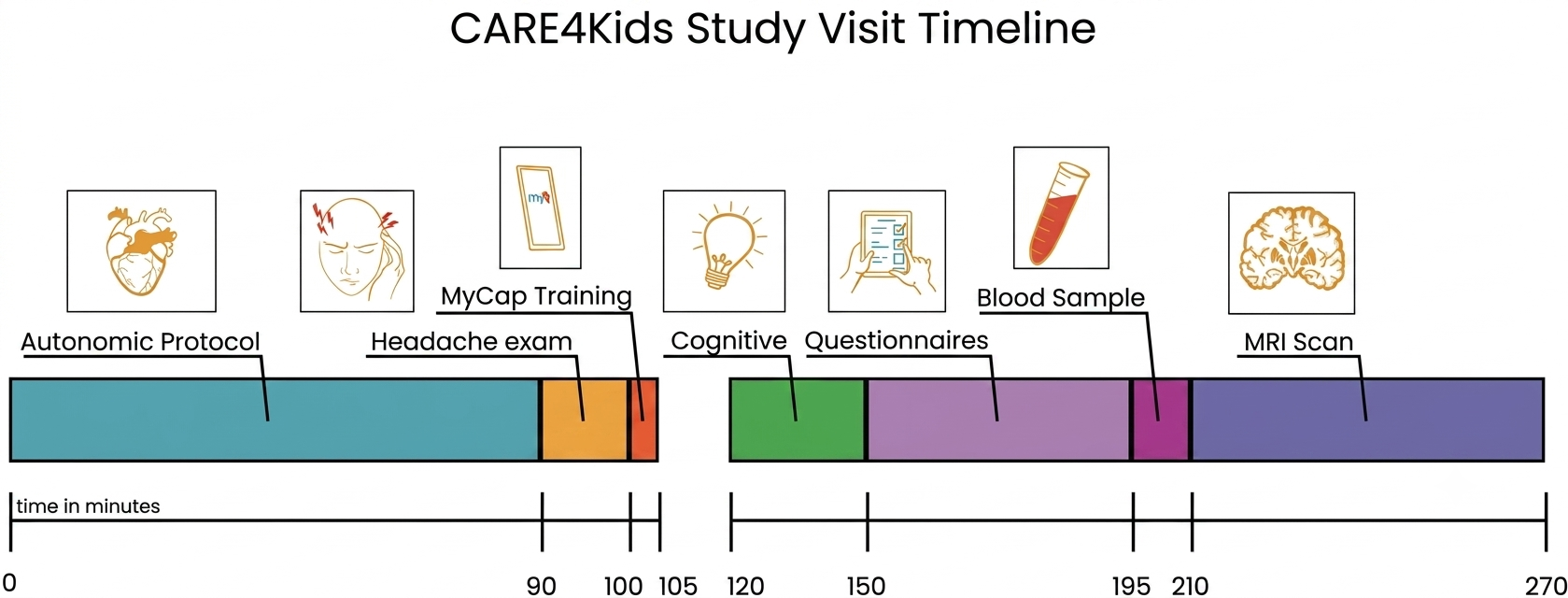
The study will involve two (2) visits with our research team that will last a few hours.
At these visits participants will:
Fill out questionnaires regarding their injuries
Measure heart rate, blood pressure and breathing as they complete various tasks
Give a blood and a saliva sample
Have a MRI Brain Scan taken (only at the first visit)
You will get a chance to tell us how you are feeling each day. Our priority is your safety and comfort, meaning all of these procedures are voluntary. Our team can tell you more about what is involved when you contact us.
What is involved for guardians?
At these visits guardians will:
Fill out questionnaires regarding the participant’s injury
Provide consent for the stated procedures
Our team can tell you more about what is involved when you contact us.
Study Procedures
Autonomic Testing
We assess autonomic function using safe, noninvasive measures of heart rate (ECG), blood pressure, breathing and the response of the pupils to a flash of light. The autonomic nervous system regulates many internal processes such as heart rate, breathing, digestion and response to stress typically outside of a person’ s conscious awareness. Common symptoms following concussions in youth include noise and/or light sensitivity, inability to tolerate exercise, dizziness or lightheadedness, problems with balance, urination, and anxiety. Our goal is to develop effective and new treatments for concussive symptoms. We will determine if some of these symptoms reflect disturbances in the function of the autonomic nervous system. By identifying the biological processes underlying concussion symptoms we hope
Blood Samples

We collect a blood sample from participants using standard venipuncture procedure and also may have an alternative capillary puncture procedure which is less invasive. After a concussion, the cells in the brain undergo changes that release proteins and lipids (ie, fats) that leak from the brain into the blood stream where they can be detected with a sample of blood taken from a vein in the arm. These proteins and lipids provide us with a window into how the brain responds to and recovers from injury. Information from these blood tests has potential to help us predict those who might take longer than three months to recover and thus would benefit from early treatment.
Neuroimaging

We analyze structural changes in the brain after concussion. Participants may have brain imaging with a MRI (Magnetic Resonance Imaging) scan. Brain scans let us study many different aspects of the brain. For instance, we can look at the strength of the connections between different parts of the brain. We can also look at activity in the brain after a concussion. The brain scans collected in the CARE4Kids study will help us understand how the brain recovers after a concussion. They may also let us predict in the future who will recover more quickly from a concussion.
Neuropsychological

The CARE4Kids project will comprehensively screen for a variety of factors to better understand the risk and protective roles they play in prolonged recoveries. These factors include individual neurocognitive abilities; personal or familial history of chronic conditions (e.g., migraines), psychiatric diagnoses, and learning disabilities; school and peer functioning; relational factors with peers and important adults in their life; environmental or family stressors; and developmental considerations. We will also carefully track treatments and interventions that are implemented during enrollment in this study, as well as monitor symptoms over time
Headache
This project will utilize questionnaires in the first and third months after injury, as well as implement daily symptom check ins to help our researchers understand what our patients’ headaches actually look like. Headaches are the most common early and persistent symptom after concussion, and yet we do not have an accurate method to predict who is at risk and who should receive treatment Additionally, these questionnaires will be paired with imaging and blood tests with a goal of elucidating the biology behind post-traumatic headache. With this information, we will be able to make great leaps in our ability to give an accurate prognosis and treatment plan for patients with concussion.